The challenge
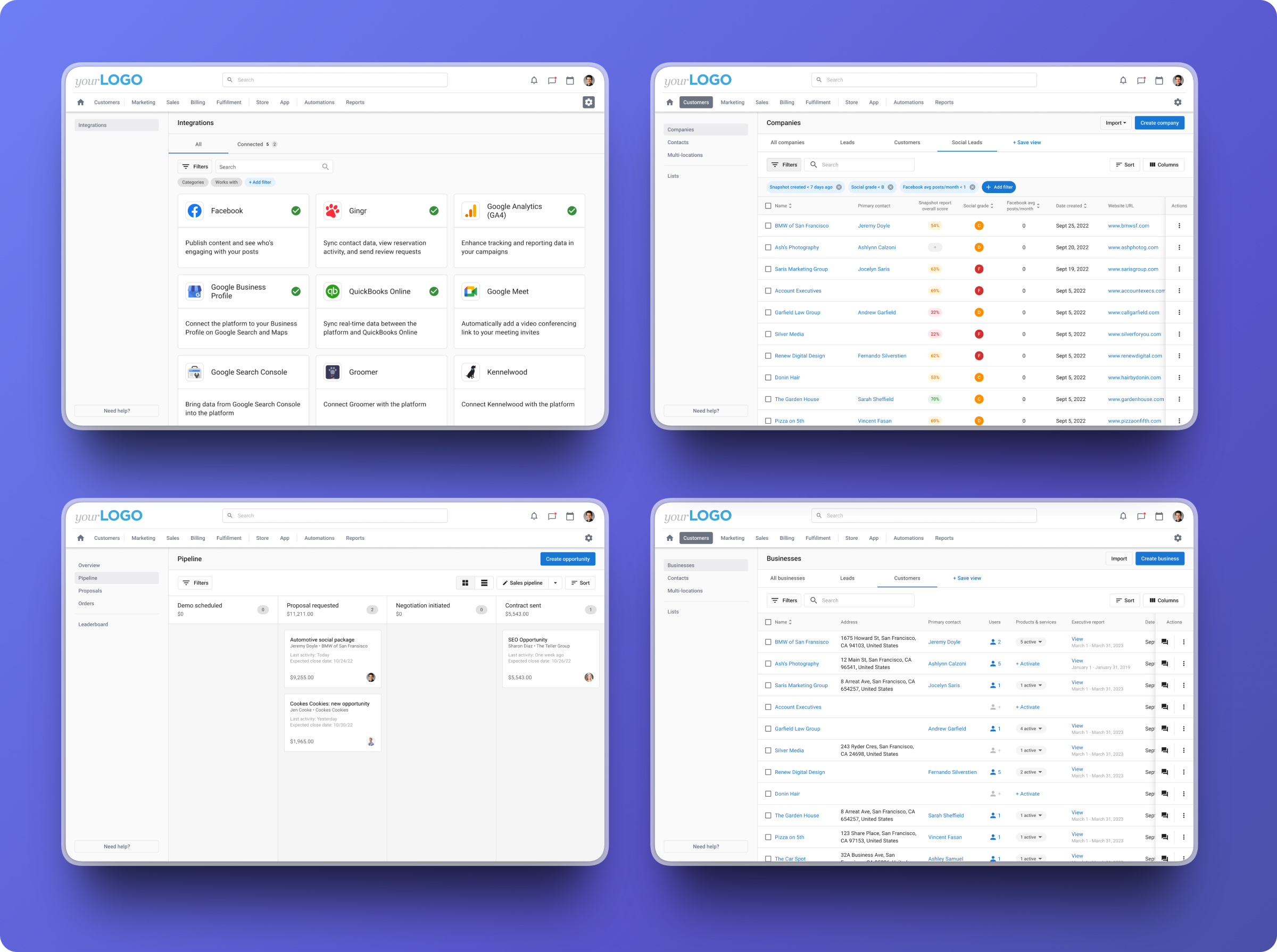
- The CRM existed in two separate centers: Partner Center (admin hub) and Sales and Success Center (sales workspace). Over time, overlapping feature needs caused duplicate development across platforms, slowing progress
- Diverging user experiences meant partners had to learn two separate systems, increasing training overhead and creating friction
- Legacy infrastructure limited scalability, making it impossible to efficiently build new features or integrate with modern tools — a critical requirement for a competitive CRM
- As the company and partner base scaled, these inefficiencies threatened adoption, productivity, and long-term maintainability
Strategy & approach
- Adopted a “One Platform” strategy: merged Partner Center and Sales & Success Center into a single scalable CRM codebase
- Implemented a modern identity and access management system to handle permissions, ensuring each persona only accessed the functionality they needed
- Reduced redundancy and technical debt, enabling more efficient feature development and future integrations with other modern tools
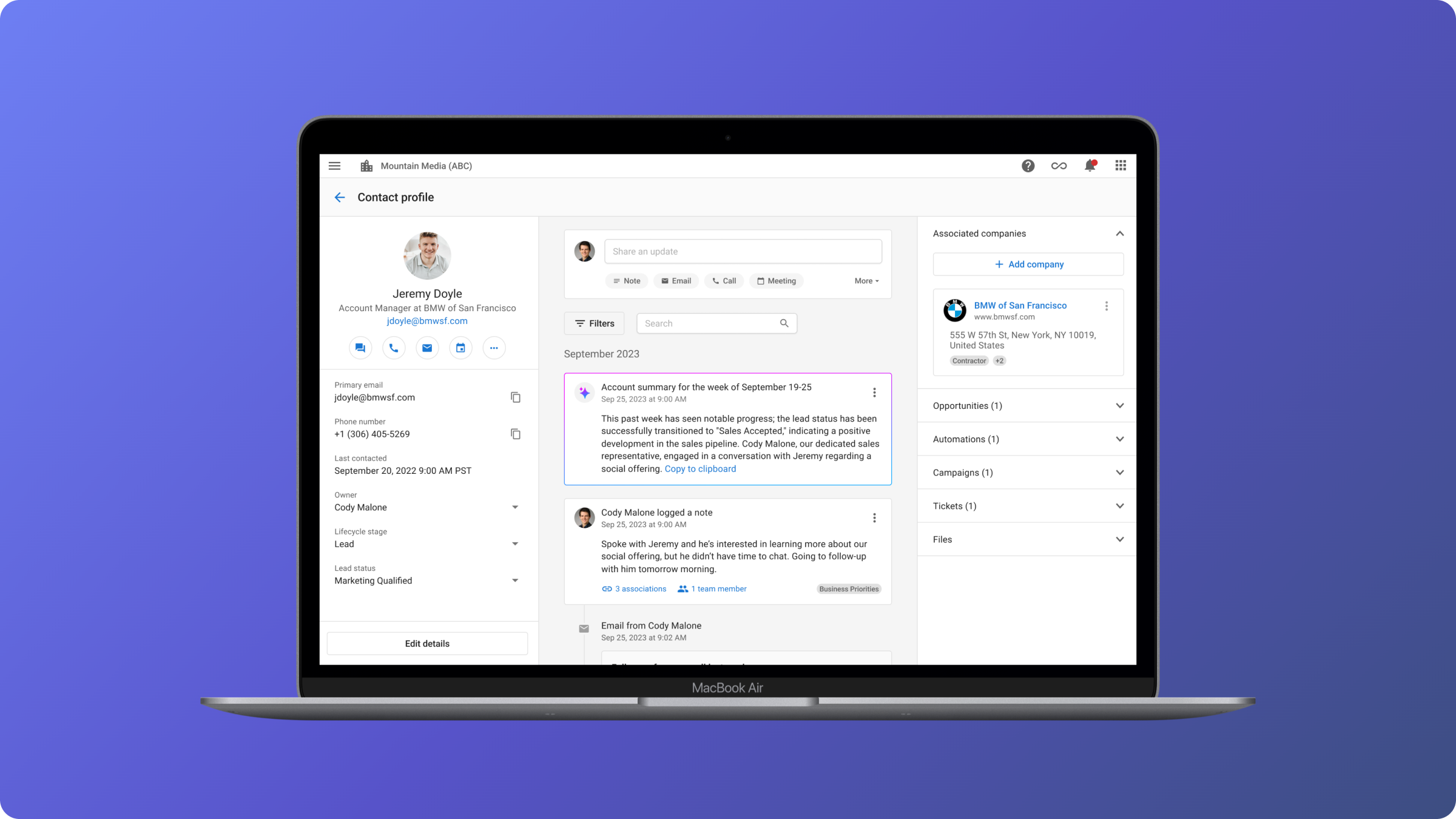
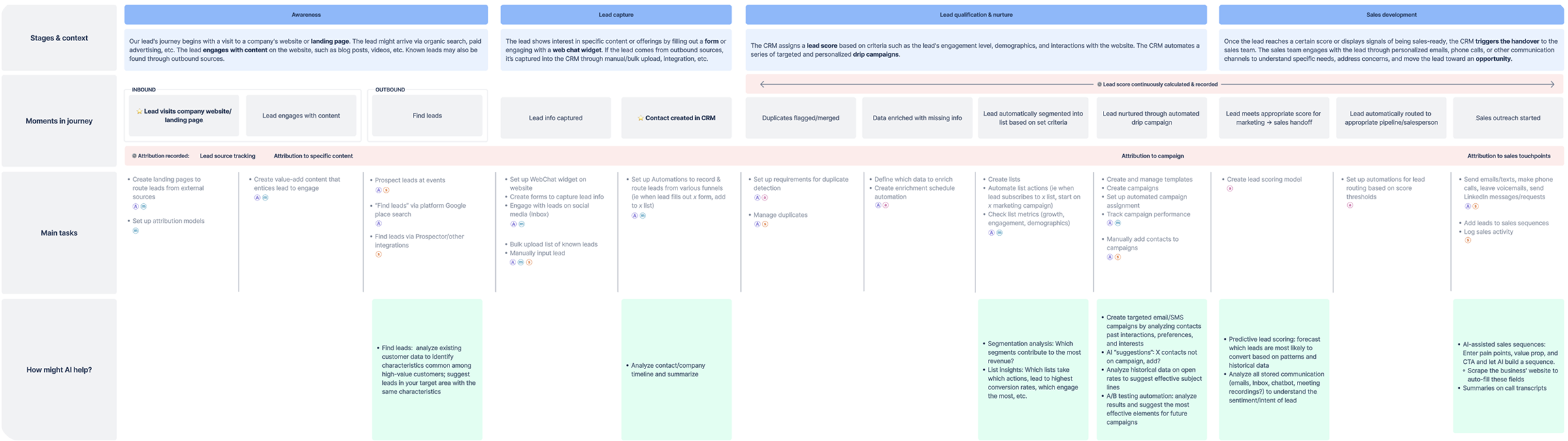
- Redesigned the front-end experience to scale across personas, aligning workflows with partners’ jobs-to-be-done
- Led cross-functional collaboration between design, engineering, and product, defining standards, documentation, and iterative workflows to maintain consistency
- Conducted research and validation with partners to ensure the unified platform addressed real pain points while minimizing disruption
Impact
- Eliminated 60 pages of legacy code and design debt, simplifying maintenance and enabling faster feature delivery
- Achieved 1,169 weekly active partners on the new CRM platform
- Integrated 13 external CRM tools and counting, improving scalability and partner workflows
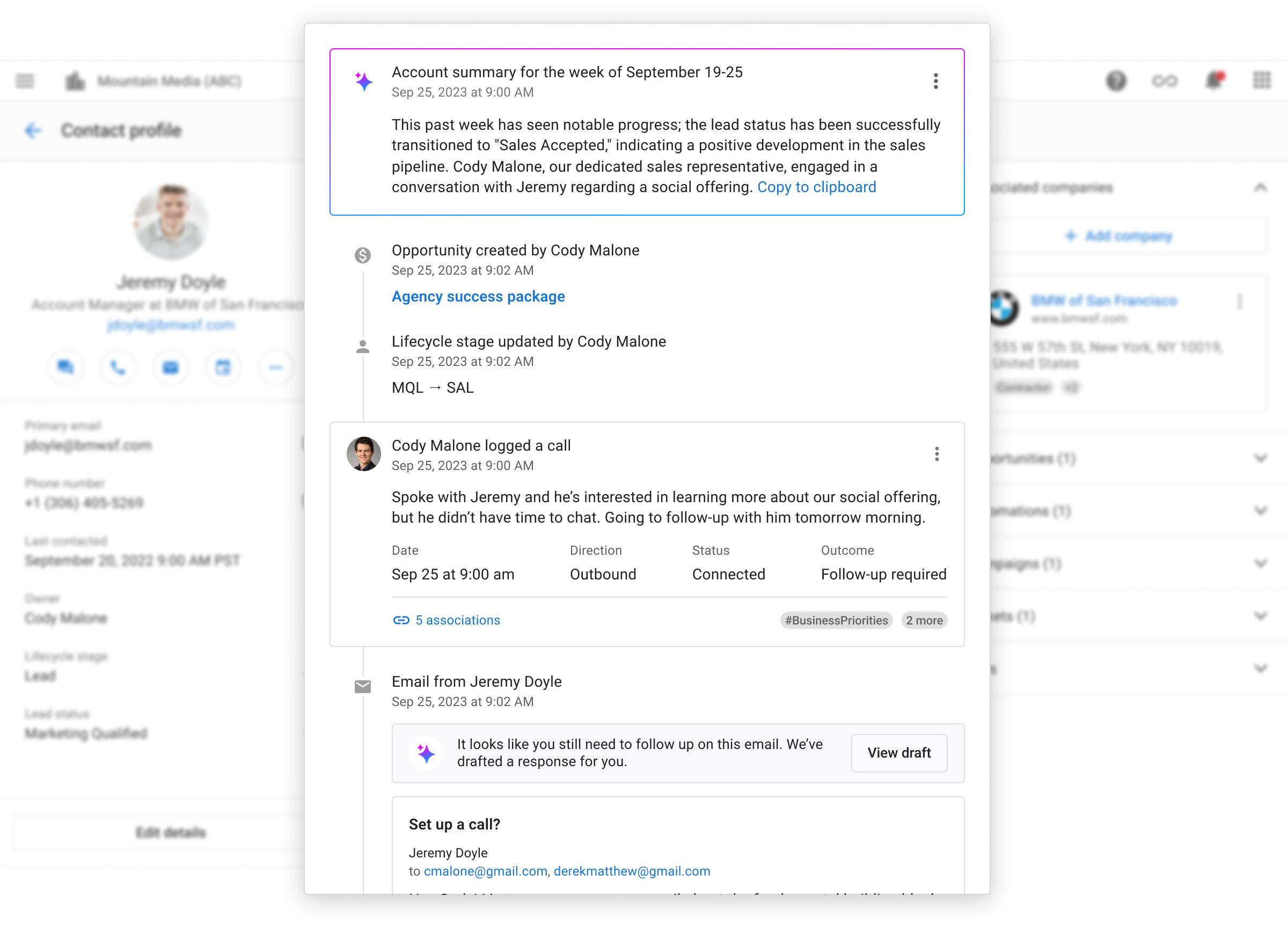
- Established a single, unified platform that scales for multiple personas, reducing friction and training overhead